
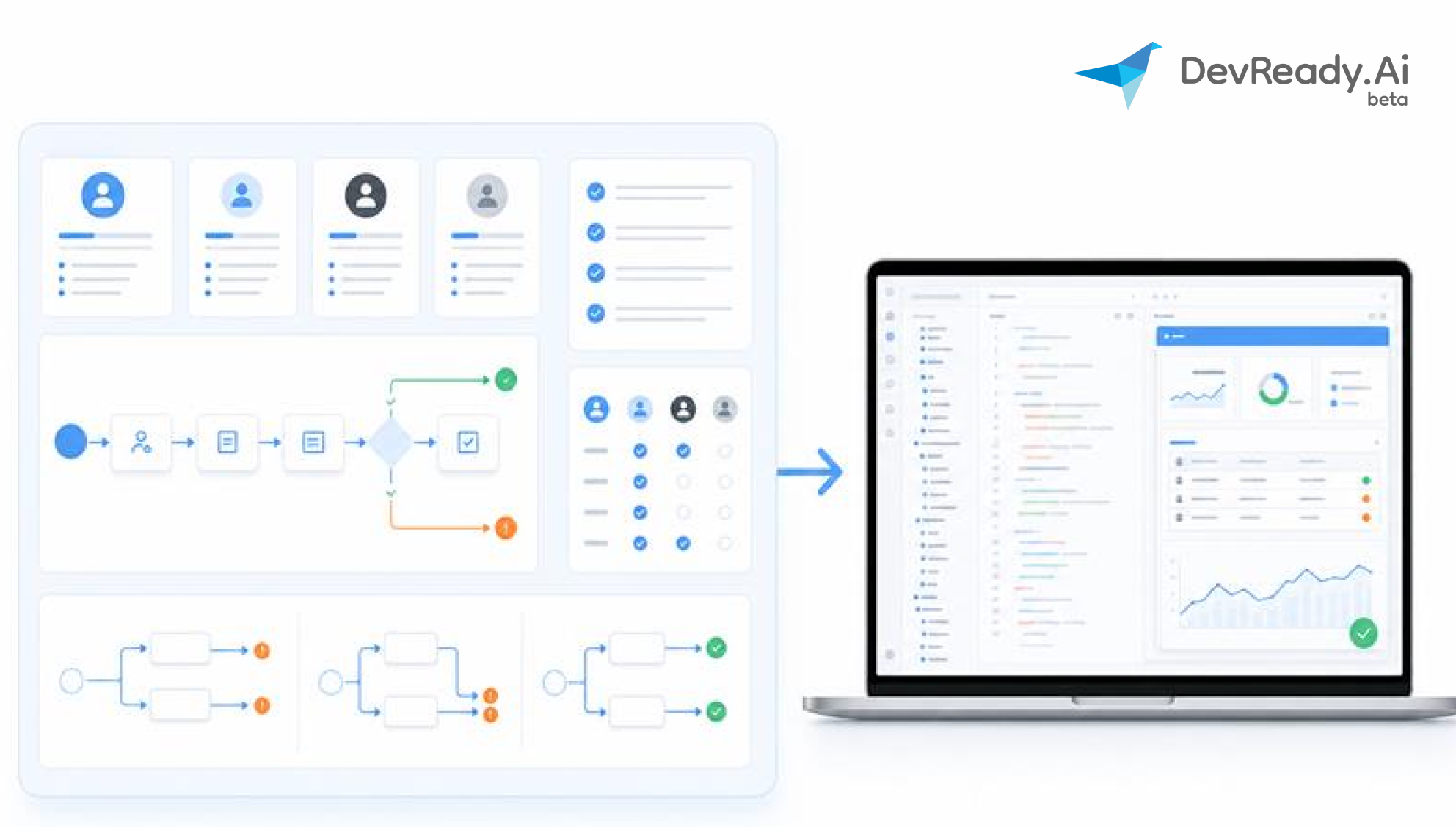
Artificial intelligence has transformed software development. Today, anyone can open Cursor, Lovable, Claude Code, Bolt, Base 44 or Replit, describe an idea in plain English, and watch an application begin to take shape in minutes. It feels like software development has become almost effortless.
That first experience is exciting. The first screen appears. A login page works. A dashboard starts taking shape. The AI responds quickly, and progress feels almost instant.
Then reality catches up.
Features stop behaving as expected. Changes begin affecting unrelated parts of the application. Every new prompt seems to solve one problem while creating another. Before long, the project has become a cycle of rewriting prompts, correcting assumptions and trying to remember what was decided three conversations ago.
Many builders assume the AI is struggling.
More often than not, the real problem started long before the first prompt.
AI Can Only Build From The Decisions You Have Made
AI coding tools are exceptionally good at turning instructions into code. What they cannot do is understand your business, your customers or your intentions unless you provide that information.
Imagine asking an architect to design a house with only one instruction: “I want something modern with four bedrooms.”
The architect would still need to know countless details before drawing meaningful plans.
- Who will live there?
- How many bathrooms are required?
- Should the garage connect to the house?
- Is the kitchen designed for entertaining?
- What is the budget?
Every unanswered question forces assumptions.
Software works exactly the same way.
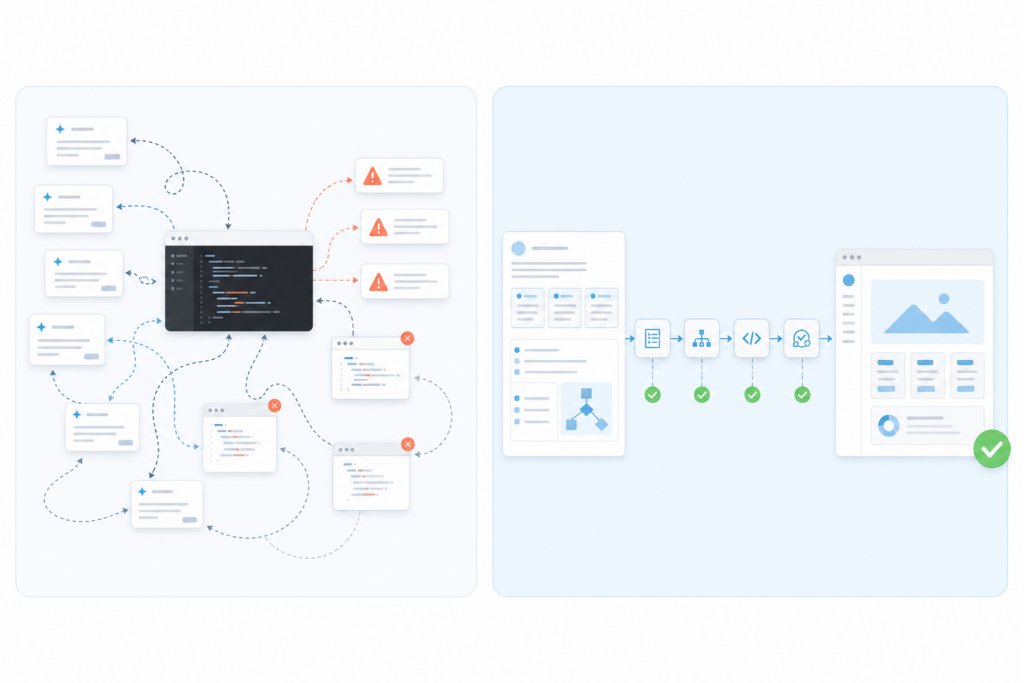
When AI doesn’t know how your subscription works, what different user roles can access, how customers cancel their account, or what happens when a payment fails, it fills those gaps itself. Sometimes those assumptions happen to match what you wanted. Often, they do not.
The more assumptions AI makes, the more corrections you make later.
Prompting Feels Productive Until It Doesn’t
Many founders begin building with a simple goal.
“Build me a client portal.”
The result usually looks impressive.
- There is a login page.
- Users can sign in.
- A dashboard appears.
- Everything feels like progress.
Then new requirements appear naturally.
- Customers need subscriptions.
- Invoices need to be generated.
- Administrators need different permissions.
- Some users are on free trials.
- Others have cancelled but still need temporary access.
- Refunds need to be processed.
- Notifications need to be sent.
Each new prompt changes the application. Each new feature depends on previous assumptions. Eventually, changing one workflow unintentionally affects another.
The project becomes increasingly difficult to reason about because there was never a shared understanding of how the system was supposed to work.
The expensive part isn’t generating the first version.
The expensive part is correcting every assumption afterwards.
Planning Creates Better Prompts Without Trying To
There is a common belief that becoming better at prompt engineering solves this problem.
Clear prompts certainly help, but they cannot replace clear product thinking.
Before writing a single prompt, experienced product teams answer questions such as:
- Who are the users?
- What problem does each feature solve?
- What business rules exist?
- What exceptions need handling?
- What happens when something goes wrong?
- What defines success for this feature?
Once those answers exist, writing prompts becomes dramatically easier.
Instead of repeatedly explaining your product to AI, you simply reference the decisions you’ve already made.
The AI spends less time guessing and more time building.
Think Beyond Features
One of the biggest mistakes first-time builders make is believing software consists only of features.
A feature list might include:
- Customer login
- Dashboard
- Subscription management
- Reports
That looks complete.
In reality, those features contain dozens of smaller decisions.
Take subscription management as an example.
A complete plan might answer questions such as:
- Can customers upgrade immediately?
- Are upgrades prorated?
- When do downgrades take effect?
- What happens if payment fails?
- Can cancelled customers reactivate?
- How long is trial access available?
- Can administrators override subscriptions?
None of these questions are particularly complicated.
However, failing to answer them before development forces AI to answer them on your behalf.
Every unanswered question increases the likelihood of future rework.
Every Prompt Should Build On A Stable Foundation
Think about constructing a building.
Workers don’t arrive on-site and begin placing walls wherever they seem appropriate.
- The foundation comes first.
- Measurements are agreed.
- Plans are reviewed.
- Materials are organised.
- Everyone works from the same blueprint.
Software deserves the same discipline.
The foundation isn’t code. The foundation is clarity.
Once the planning is complete, every prompt becomes more focused because everyone, whether that’s AI, a developer or another team member, is working from the same understanding of the product.
AI Development Is Becoming A Planning Problem
As AI becomes faster, the bottleneck shifts.
Writing code is no longer the slowest part of software development.
Making good decisions is.
Teams that invest time defining requirements, business rules and user flows before opening an AI coding tool consistently spend less time fixing mistakes later.
They don’t necessarily write better prompts.
They simply provide better context.
That distinction matters.
A Better Workflow For AI Development
A modern AI-assisted workflow might look something like this:
- Define the feature.
- Clarify user roles and responsibilities.
- Capture business rules.
- Identify edge cases.
- Define acceptance criteria.
- Prioritise the work.
- Give AI the structured plan.
- Review and refine the output.
- Repeat using the same source of truth.
Notice that prompting happens after planning.
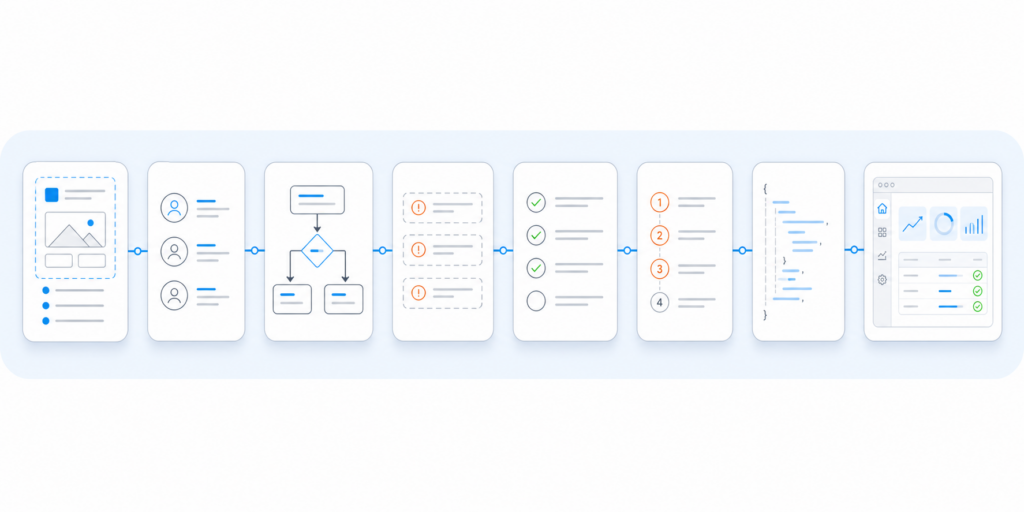
That single change dramatically reduces unnecessary iterations because every conversation with AI begins from an agreed understanding rather than an evolving idea.
Planning Doesn’t Slow You Down
Some founders worry that planning delays development.
The opposite is often true.
Consider two teams building the same customer portal.
The first team opens an AI coding tool immediately. They spend several days adding features, rewriting prompts and correcting unexpected behaviour.
The second team spends thirty minutes documenting user roles, business rules, payment logic and feature priorities before they begin.
Both teams eventually produce a working portal.
The difference lies in how they got there.
One team spent their time making decisions deliberately.
The other spent their time discovering those decisions through trial and error.
Planning doesn’t eliminate change. Software always evolves.
What planning does is reduce unnecessary uncertainty, allowing every future change to happen on a stronger foundation.
The Future Belongs to Teams That Plan Before They Prompt
AI coding tools will continue becoming faster and more capable. New models will generate cleaner code, understand more complex instructions and build increasingly sophisticated applications.
What won’t change is the importance of knowing what should be built before AI starts writing code.
The teams that consistently deliver successful software won’t simply be the ones with the best AI tools. They’ll be the ones with the clearest product vision, well-defined requirements and a structured plan that gives AI the context it needs to succeed.
Whether you’re building an MVP, modernising an existing application or launching a new SaaS product, investing time in planning first will almost always reduce rework, improve build quality and help you move from idea to delivery with greater confidence.
AI can accelerate development.
It cannot replace product thinking.
The better your plan, the better your software.
Ready to Build With Confidence?
If you’re spending more time rewriting prompts than making progress, the problem probably isn’t your AI tool. It’s the lack of a clear, structured plan.
At DevReady, we help founders, product teams and businesses turn rough ideas into build-ready specifications that work with AI coding tools like Cursor, Claude Code, Lovable and Bolt, or with professional development teams.
Whether you’re starting from scratch or already have a project underway, we’ll help you define your features, business rules, user flows, edge cases and acceptance criteria before development begins.
Book a free strategy call with our team to see how better planning can help you build faster, reduce costly rework and get more from every AI prompt.
Book Your Free Strategy Call Now!
Frequently Asked Questions
What does “planning before prompting” mean?
Planning before prompting means defining your features, business rules, user flows, edge cases and acceptance criteria before asking an AI coding tool to generate code. This gives AI the context it needs to produce more accurate and consistent results.
Why do AI-generated software projects often require so much rework?
Most rework happens because important product decisions were never documented. AI fills in missing information with assumptions, and those assumptions often need correcting as the project evolves.
Does planning slow down software development?
Planning usually reduces the total time spent building because it minimises misunderstandings, repeated prompts and costly changes later in the project.
Is prompt engineering enough to build good software?
Prompt engineering improves communication with AI, but it cannot replace product planning. AI still relies on clear requirements, business rules and user context to generate reliable software.
Can planning help if I’ve already started building?
Yes. Existing projects can still benefit from documenting the current state, identifying missing requirements and creating a structured plan before continuing development. Doing so helps reduce future rework and provides a clearer foundation for both AI coding tools and developers.